Sometimes a family resemblance is just a family resemblance.
But sometimes, it raises a question that simply won’t go away.
A remarkable story shared online tells of a mother who began questioning why her adopted son looked so strikingly similar to her biological child. Eventually, she decided there was only one way to get a definitive answer.
She turned to DNA testing.
What the results reportedly revealed changed her understanding of her family completely. 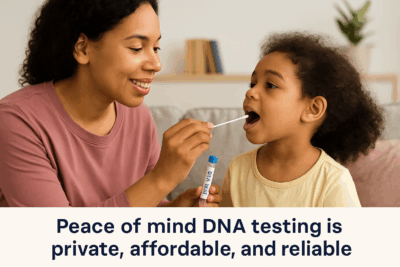
An Adoption Born Out of Tragedy
According to the story reported by Upworthy, the woman and her husband had developed a friendship with a younger neighbour.
Two years after they met, the neighbour gave birth to a baby boy. She reportedly explained that the child’s father was not involved in his life.
When the neighbour experienced health problems, the couple began helping care for her son.
Sadly, the child’s mother later passed away.
The couple subsequently became his foster parents and eventually legally adopted him when he was seven years old.
For the family, he was now their son.
But as the years passed, something began troubling his adoptive mother.
The Boys Looked Too Much Alike
By the time the adopted boy was 10 and the couple’s biological son was five, their mother couldn’t ignore their physical similarities.
The two boys looked remarkably alike.
It was enough to raise a difficult question:
Could they somehow be biologically related?
Appearances alone, of course, cannot establish biological relationships.
Brothers can look completely different. Unrelated people can look surprisingly similar. Children can inherit different combinations of genetic characteristics from their biological parents.
But when genuine questions about biological relationships arise, modern DNA testing can provide scientific evidence that appearance simply cannot.
The mother decided she needed an answer.
She arranged a DNA test.
The DNA Results Revealed They Were Half-Brothers
The reported results were extraordinary.
The two boys weren’t merely similar in appearance.
They were reportedly half-brothers.
That meant they shared one biological parent.
The revelation pointed to an even more difficult truth: according to the woman’s account, her husband was the biological father of the child they had adopted.
The neighbour’s son whom they had cared for, fostered and ultimately welcomed permanently into their family was reportedly her husband’s biological child.
The DNA result therefore didn’t simply answer a question about why two children looked alike.
It exposed a family relationship that had apparently remained hidden for years.
When DNA Testing Provides More Than a Paternity Answer
Stories like this demonstrate why DNA testing can be extraordinarily powerful.
A DNA test doesn’t know the circumstances surrounding a conception. It doesn’t understand marriages, relationships, family histories or the emotional consequences of a result.
It simply examines genetic information.
And that information can sometimes answer questions families have carried for years.
DNA testing can potentially help investigate biological relationships including:
- Paternity — is an alleged father the biological father of a child?
- Maternity — is an alleged mother the biological mother?
- Sibling relationships — are two individuals full siblings, half-siblings or potentially unrelated?
- Grandparentage — can biological relationships be investigated through grandparents?
- Avuncular relationships — can an aunt or uncle help establish a biological family connection?
- Other kinship relationships — depending on which relatives are available for testing.
The appropriate test depends on the individuals available and the biological relationship being investigated.
Physical Resemblance Is Not Proof of Paternity
One of the most important lessons from this story is that looking alike does not prove biological parentage.
Families frequently make assumptions based on facial features, complexion, eye colour, height, hair or other characteristics.
Comments such as:
“He looks exactly like his father.”
or
“She doesn’t look anything like me.”
may create reassurance—or doubt—but neither constitutes scientific evidence of parentage.
A properly performed DNA relationship test examines specific genetic markers inherited from biological parents.
That provides objective scientific evidence rather than relying on resemblance, rumours or assumptions.
DNA Testing Can Answer Questions — But the Answers Can Have Consequences
There is another important side to this story.
Obtaining the biological answer may be straightforward.
Living with that answer may not be.
DNA results can reveal unexpected paternity, previously unknown siblings and other biological relationships that individuals and families never anticipated discovering.
That is why anyone considering a DNA test should think carefully about the possible outcomes.
Ask yourself:
Am I prepared for either result?
For some people, confirmation brings enormous relief and closure.
For others, the result may fundamentally change how they understand their family history.
The science can provide the answer.
What happens after receiving that answer is deeply personal.
When You Need Certainty, Test — Don’t Guess
Questions about biological relationships can remain unresolved for years.
Sometimes they begin with a resemblance.
Sometimes with something someone says.
Sometimes with conflicting dates or information.
And sometimes it’s simply a question a person has carried for most of their life.
Whatever creates the uncertainty, speculation rarely provides genuine peace of mind.
DNA testing can.
At DNATest.co.za, we provide confidential DNA relationship testing for individuals and families throughout South Africa.
Our testing services include paternity, maternity and other biological relationship testing, with professional guidance available to help determine which type of DNA test is appropriate for your circumstances.
Because when the question is biological, you shouldn’t have to rely on appearances or assumptions.
You can know.
Need Answers About a Biological Relationship?
Contact DNATest.co.za to discuss your circumstances confidentially and determine the most appropriate DNA test.
DNATest.co.za — When you need to know.
This article discusses a family story originally reported by Upworthy and based on an account shared online. The circumstances described should therefore be understood as reported claims rather than independently verified facts.